Data from the Mortgage Bankers Association (MBA) has revealed a notable downturn in mortgage applications, with a 9.7% decrease reported in the week ending January 2, 2026, adjusted for seasonal fluctuations. In an unadjusted context, the Market Composite Index, which tracks mortgage loan application volumes, declined by 28% compared to the previous two weeks.
The Refinance Index experienced a 14% decrease on a holiday-adjusted basis, although it's still 133% higher than the same week last year. Conversely, the unadjusted Refinance Index plummeted by 31% over the same time frame, but remains 108% above last year's figures. Meanwhile, the seasonally adjusted Purchase Index fell by 6%, with a 23% drop on an unadjusted basis, although it stands 10% higher year-over-year.
Market Overview
Joel Kan, MBA’s Vice President and Deputy Chief Economist, attributed the fluctuations to recent mortgage rate changes, stating they began the year at 6.25%, down from 6.32%, marking the lowest point since September 2024. Despite a brief uptick in refinance applications by 7% for the week, the momentum has slowed compared to pre-holiday figures. FHA refinance applications saw a rise of 19%, yet this increase is mainly a recovery from an earlier decline.
Kan's insights underscore a significant factor: the relationship between mortgage rates and application volumes is intricately tied. When rates increase, many potential buyers and existing homeowners may choose to delay purchases or refinancing. Conversely, lower rates generally entice borrowers back to the market. However, in this case, while the modest decrease in rates may seem encouraging, it hasn't been enough to spur robust refinancing activity, suggesting a lack of confidence among borrowers.
Current Trends in Purchase Applications
On the purchase side, applications are up 10% relative to the same period last year, yet they remain on a downward trend following reductions in both conventional and FHA applications. The average loan size is now $408,700, the smallest recorded in the last year, influenced by lower average amounts across various loan categories.
This situation reveals a deeper pattern: while year-over-year comparisons might show improvement, many prospective homebuyers continue to feel the pinch of high home prices and fluctuating interest rates. If you're working in this space, you'll recognize that the market isn't just reacting to current rates but is also shaped by buyers' broader economic concerns—including inflation, job security, and the looming possibility of economic downturn. And yet, this year's figures point to a market that's evidently been constrained, with many buyers potentially sidelined by uncertainty.
Interest Rate Insights
The average contract interest rate for 30-year fixed-rate mortgages with conforming loan balances (up to $806,500) decreased to 6.25% with points dropping to 0.57 from 0.59 for loans at an 80% loan-to-value ratio.
These small changes in rates can indeed have a psychological impact on potential borrowers. According to MBA reports, while purchase activity remains elevated compared to last year's lows, it is still below optimal performance levels seen earlier in the year. The likelihood of continued fluctuations in refinance opportunities will depend heavily on future movements in mortgage rates.
This is where a paradox arises: lower rates should encourage more activity, yet the current climate has left many cautious. Buyers may be waiting for a clearer picture before entering the market, especially amid ongoing inflationary pressures and concerns about a potential recession.
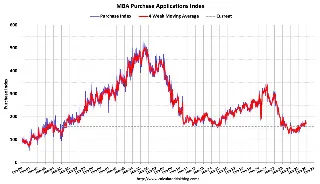
Click on graph for larger image.
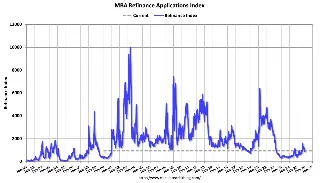
Graphs illustrating the MBA mortgage purchase and refinance indexes indicate that while overall purchase activity continues to trend upward compared to last year, it still reflects a depressed level of engagement compared to pre-pandemic vigor. The ongoing uncertainty might be why buyers refrain from diving into the market, reflecting a cautious optimism rather than a full-on resurgence.
Future Outlook: What Lies Ahead?
Going forward, the mortgage market's dynamics will likely continue to be influenced by overarching economic factors. With inflation remaining a persistent concern, borrowers may find themselves navigating an economic landscape that impacts buyer confidence and activity in ways that ripen slowly over time.
While the current data suggests a slight improvement in some applications, the trends still reflect unease. The refinancing market, in particular, remains a point of contention—applying pressure on lenders to develop strategies that can attract this segment back into the fold. What this means for you, whether you're a lender or a potential borrower, is straightforward: understanding the nuances of this market can help you anticipate the right moment for action.
Watch these mortgage rates closely. A meaningful shift, possibly prompted by external economic events, could either incentivize or deter borrowers. As it stands, caution seems to be the prevailing sentiment, with many maintaining a wait-and-see approach. If conditions shift, though, the market could experience a significant churn, which will demand both vigilance and adaptability from all stakeholders involved.