This 27-Year-Old Left Wall Street to Create a Product That ‘Gives People Time Back’— and It Sold $10,000 in Just 36 Hours
Maria Cabral Menezes, a former trader, made a bold transition from mainstream finance to entrepreneurship, driven by a desire to solve everyday clothing dilemmas.
Key Insights
- Maria Cabral Menezes, 27, transitioned from finance at Citadel and JPMorgan to launch a "dry shampoo for clothes."
- Her need for a product arose during her trading career when she struggled with clothes that weren't dirty enough to wash but felt too worn to re-wear confidently.
- The Reset Spray, priced at $29, generated $10,000 in sales shortly after its launch in early August.
Maria Cabral Menezes never envisioned herself as an entrepreneur, yet she swiftly gained traction with her innovative product that notched $10,000 in sales within just 36 hours of its release. Originally from Brazil, she pursued her studies at the University of Pennsylvania majoring in behavioral economics, retailing, and international development. After graduating in 2021, she embarked on a career at JPMorgan Chase as a global equities trader, before moving to Citadel a year later.
"I came to the U.S. to follow the conventional finance path," Menezes confides to Entrepreneur. "I never considered entrepreneurship as an option."
During her tenure as a trader, Menezes identified a serious pain point: the dilemma of rewearing blazers at conferences without feeling confident that they were sufficiently clean. After gym sessions, she often found herself juggling sweaty clothes in a duffel bag throughout the day. Plus, there was always the issue with clothes she wore once that accumulated on a chair at home—clothes too fresh for the wash but too worn to confidently don again. This cycle led to unnecessary trips to the dry cleaner.
"I kept thinking, I wish there was a product similar to dry shampoo, but for clothing," she recalls. "A spray that enables you to rewear things without constant washing or dry cleaning, which can harm the fabric's longevity."

Developing the Idea
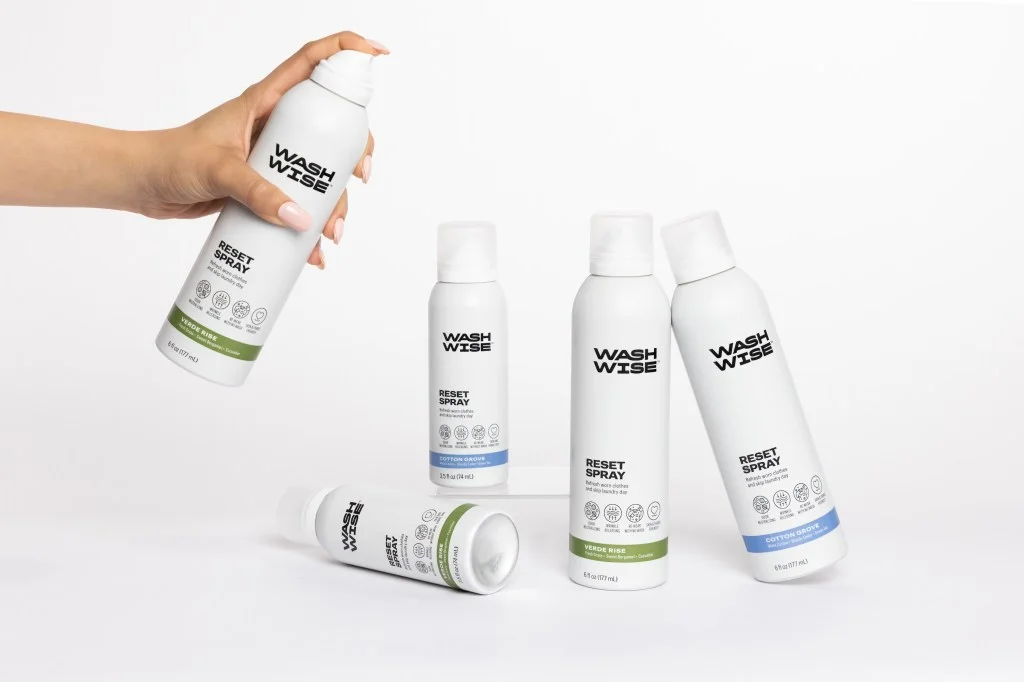
Determined to create a solution, Menezes conducted market research and quickly realized existing laundry products largely overlooked the periods when clothes were not in the washing machine. This insight led her to develop WashWise and its flagship product, the Reset Spray. Marketed as "dry clean in a bottle," this $29 spray reduces wrinkles, neutralizes odors, and is safe for both skin and fabric. It comes in various fragrances and two sizes, making it travel-friendly.
"My aim is to make users question the cleanliness of their clothes," she shares. "If they’re unsure, we provide the solution."
While sustainability informs the product's design, Menezes emphasizes its convenience. WashWise appeals to consumers balancing travel, gym sessions, and busy lifestyles—perfect for anyone reluctant to do laundry after every minor wear.
"We’re essentially giving people their time back," she declares.
There's a strategic depth to Menezes’ messaging. The term “dry shampoo for clothes” resonates with women who use dry shampoo, but the utility extends to a broader audience.
"It's not only about the women familiar with 'dry shampoo for clothes,'” she elaborates. “It resonates with professionals and students alike, often caught between meetings or lacking motivation to do laundry.”
Consumer insights revealed by Menezes indicate that one bottle of Reset Spray could potentially replace up to $300 in dry-cleaning, save six hours of laundry work, and conserve 110 gallons of water—though these estimates vary depending on individual use.
Formulating a Solution
Menezes began the spray’s development by studying the functionality of a washing machine, aiming to replicate its benefits in spray form. While still employed at Citadel last year, she connected with a chemist via LinkedIn. Together, they experimented at home until they arrived at a formulation they felt was market-ready.
The development process encompassed up to 15 iterations. When they approached a manufacturer, only minor adjustments were made to improve stability rather than the core formula.
"By the time we reached out for production, we had something we trusted," Menezes explains.
This journey from concept to completion took over a year. Initially, Menezes considered creating a water-soluble bag for sweaty clothes, but quickly recognized a fundamental flaw.
"Sweaty items would dissolve the bag before it even reached home," she admits, leading her to pivot away from that idea while hinting that WashWise may eventually explore another solution for managing especially sweaty clothes.
Applying a Finance Mindset to Consumer Products
The challenge also posed intricate formulation issues. Ingredients responsible for neutralizing odors often clashed with fragrance, while others compromised on wrinkle reduction or cleansing effectiveness.
Once confident in her product’s potential, Menezes left Citadel. Although she started developing WashWise while still working at Citadel, the demands of her finance role made it clear a true side project wasn't feasible.
"I made the call to leave once I validated the model," she recalls. Since June of the previous year, she has been dedicated full-time to WashWise.
Prior to securing external financing, Menezes invested between $50,000 and $70,000 from her savings. Subsequently, WashWise raised $1.2 million from a mix of investors, reflecting confidence in her vision. Notable backers include Jack Abraham, co-founder of Hims & Hers, Brian Tate of Oats Overnight, and FJ Labs.
For over a year, she has refrained from taking a salary, choosing instead to channel resources toward staff and consumer outreach.
"Every dollar I invest holds intrinsic value," she asserts. "I prefer to allocate funds where they produce significant returns."
Menezes credit her background in finance with shaping her approach to business operations, instilling a rigorous process-oriented mindset. Her experience at Citadel reinforced the need for maintaining a transparent reasoning behind every task and continually seeking opportunities for improvement and scalability.
"In a competitive environment like Citadel, having a robust process was essential," she explains. "There's no place for 'that’s how we’ve always done it.'"
The Shift from Finance to Startup
The transition from evaluating public investments to establishing a startup compelled Menezes to become comfortable with ambiguity. Unlike finance, where data offers immediate insights on performance, the startup world requires navigating less tangible elements such as hiring and branding.
"This experience has enhanced my intuition," she shares, highlighting the divergence from a quantifiable approach.
Menezes believes that disciplined methods increase preparedness for spontaneous decision-making. “When a surprise decision arises, I feel equipped to handle it with clarity,” she admits, expressing confidence in her judgment.
Creating Demand Prior to Launch
The launch of WashWise in early August was the result of a deliberate audience-building strategy that unfolded over the preceding year. However, the impressive first-day sales directly reflected the groundwork solidified in the months leading up to the product’s introduction.