Former speech-language pathologist Janell Stephens built haircare brand Camille Rose from a home kitchen into a line now sold at Target, Ulta and CVS.
Janell Stephens spent years treating people with swallowing disorders and brain injuries before she ever thought about hair. Today she runs Camille Rose, a haircare brand now stocked at Target, Ulta and CVS. The path from her kitchen to those shelves says a lot about how a small brand can grow, and where it can stall.
From speech therapy to a home-health agency
Stephens trained as a speech-language pathologist. Before Camille Rose, she worked with stroke survivors and people with swallowing disorders, traumatic brain injuries and speech disorders. After graduate school she opened a home-health agency and ran it for about eight years, which is a long stretch of managing clinical work, staff and payroll.
Then her husband entered a medical fellowship in hematology and oncology, and Stephens made a decision that looked nothing like a typical founder's story. She sold her clinic and went after an interest she'd carried for years: formulating hair and skin products. She spent about a year studying under an herbalist, learning how oils, herbs and butters behave on hair and skin.
"He taught me about herbs," she says. "He taught me about the benefits of oils, how to make an emollient, the benefits of different butters and how they would affect or how they would apply to the hair and skin."
A kitchen full of experiments
Camille Rose began as a personal problem. Stephens wanted products that actually changed her own hair and her children's hair, and she was reading labels closely at a time when she didn't like what she saw on the shelf.
"My kids had needs; I had needs," Stephens says. "I needed products that were showing a difference in my hair and in their hair, and I was also [reading the labels of] everything that I was using back then."
Rather than settle, she bought ingredients, mixed batches and kept what worked. "From that point on, I became obsessed with it," she says. "If it works, yes, I'll keep it. If it doesn't, throw it out, start over."
The first product she jarred, labeled and sold was Algae Renew Deep Conditioner, built on blue-green algae and vitamins. It's still one of the brand's bestsellers. Curl Love Moisture Milk, another early product, remains central to the line.
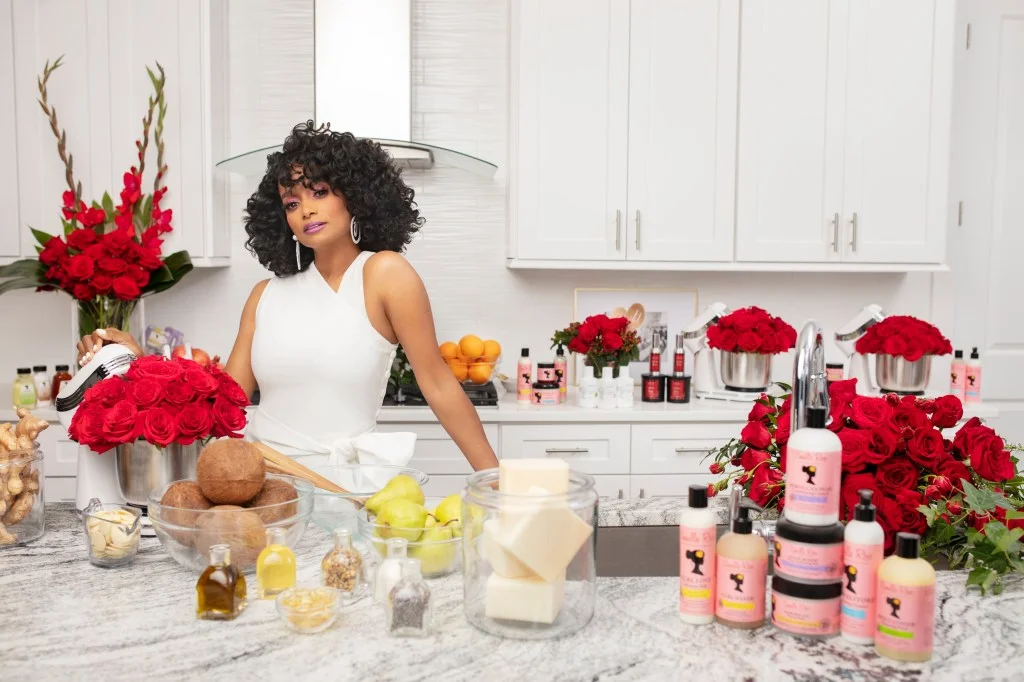
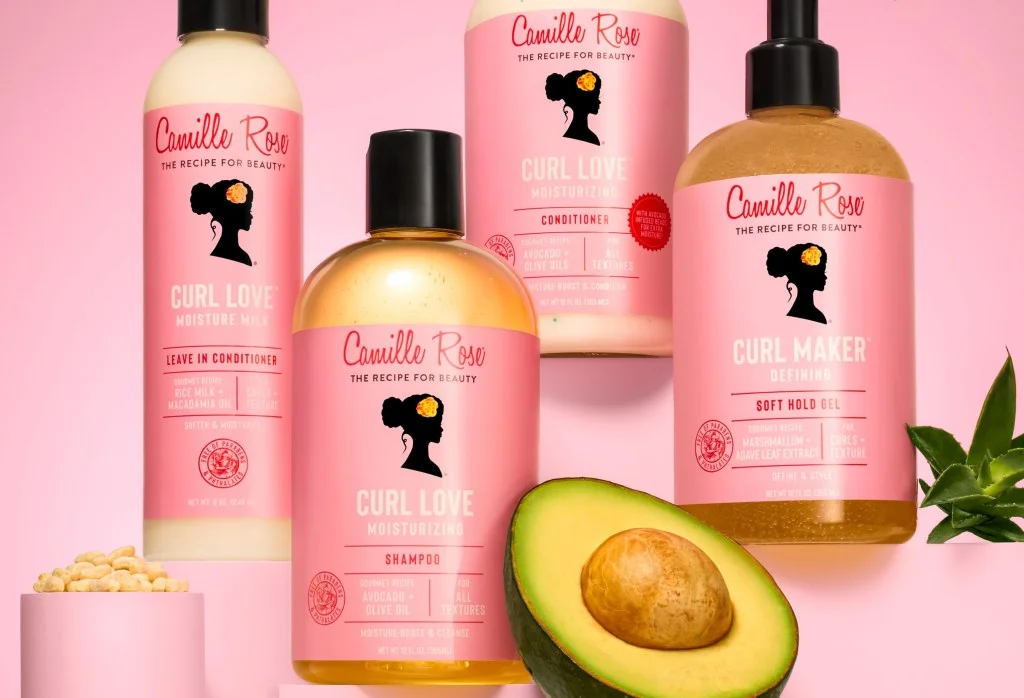
Janell Stephens. Credit: Camille RoseCurl Love Collection. Credit: Camille Rose
Stephens calls four products the brand's "core four": Cocoa Nibs & Honey Growth Serum, Curl Love Moisture Milk, Algae Renew Deep Conditioner and Almond Jai Twisting Butter. If a new customer asks where to start, though, she usually points to the deep conditioner.
Food logic applied to hair
The products also set the tone for the brand's philosophy, which borrows from food. Camille Rose uses food-inspired ingredients and draws a direct line between what you eat and what you put on your hair and skin.
"If it nourishes your body inside, my philosophy and what I live by is that it should have those same benefits to the outside of the body," she says.
Sea moss is her clearest example. Consumers already take it as a nutritional ingredient because of its mineral content, and Stephens sees a similar case for products applied externally.
She is also pointed about one marketing habit. "We're not all-natural," Stephens says. "We never claim all-natural, and I don't think anybody should." Camille Rose uses natural and naturally derived ingredients, but it also uses preservatives. That's not a small detail. Beauty products have to stay stable, safe and effective over time, and food-grade ingredients alone can't do that. "You also cannot make one product solely on food-grade ingredients," she says. "The rest are all ingredients that are science-backed."
From giveaways to a manufacturing partner
Stephens started by making products as a hobby and handing them out to friends and family in exchange for feedback. When people kept asking for more, she built a website and started taking orders. That repeat demand, not a business plan, was the first real market test.
Orders grew through word of mouth, Facebook and customer results. Once traction showed up online, though, she realized the homemade approach couldn't scale. She reached out to a beauty brand whose products she already used and asked whether she could work with its chemist. The chemist agreed to work with her on contract and helped turn kitchen recipes into formulations that could be produced consistently.
"It went from a pinch of this and a dash of that to real percentages," Stephens says.
That precision mattered more as the brand left the kitchen behind. Stephens says it took roughly a year and a half to find a manufacturer and chemist relationship that matched the company's needs and values. Given how many small brands stall at exactly this stage, that timeline is more telling than it looks.
The hair show that changed the trajectory
The brand's first major retail breakthrough came in 2012 at a hair show, where Stephens had a booth to introduce Camille Rose to customers and industry contacts. A buyer stopped by. Stephens didn't initially know which retailer he represented, and they talked for about an hour about where the brand came from, why she started it and what each product was for.
"At the end of that hour, he pulled out his card and he said, 'I am a buyer from Target. I would love to fly you up,'" Stephens recalls.
The brand launched in 100 Target stores. That sounds like a clean win, but the early operations were brutal. "My first orders were thousands per product, so I was nonstop," Stephens says. She leaned on family and friends to help fill orders. In those early days she also handled customer service, shipping, packing, social media and operations. "I was my everything," she says.
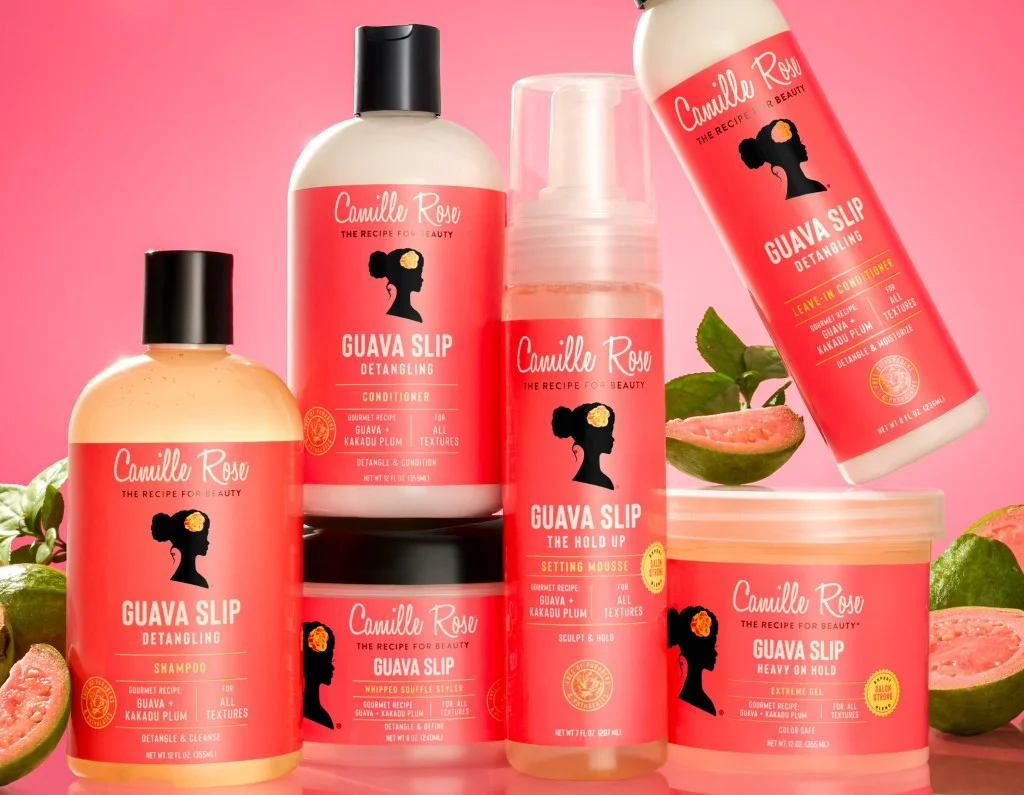
Guava Collection. Credit: Camille Rose
Growing up without losing the lab
As volume grew, Stephens moved operations from her home into a small warehouse, hired another person to help with formulation and gradually built a more conventional company. Today the team covers marketing, social media, digital, creative, operations, customer service and warehousing. The company now has 35 employees.
Stephens hasn't stepped back from the product side, though. "I'm still a product developer for Camille Rose," she says. "Of course, I have a lab and a team of chemists and researchers that's working with me."
The process is far more structured than it was in the kitchen. A new product can take anywhere from several months to a year. Stephens begins with a concept, then works with her team to develop, evaluate and refine it. She tests formulas herself, works with stylists and hair models, and checks results across different curl types and textures against established products on the market. When a formula falls short on shine, frizz control or overall performance, it goes back to the lab. Keeping that standard intact matters most during scale-up. "I needed to make sure that my manufacturer and the chemist that I'm working with honored our formulas," she says.
That standard is the part worth watching. Plenty of brands can hold a formula in a small batch. Far fewer can keep it intact when a manufacturer is running thousands of units.
Where the growth is coming from
The company says it's on track for nine-figure revenue this year and expects continued double-digit growth in 2027. The breakout moment came earlier this year, when reality TV star Kim Kardashian used Camille Rose products to style her 8-year-old daughter Chicago's hair. Stephens says the brand relies on social media, influencers and celebrity relationships to stay visible, and TikTok is a priority.
Her advice for founders on social media is almost deliberately low-tech. "Turn the camera on and start talking about your product," she says. "You may have five people listening; you may have 500 people listening, but keep at it."
For a founder launching a haircare product, she says the first 90 days should focus on brand identity, awareness and consistent outreach. That means building a solid brand guide, becoming the brand's own first influencer and using both organic and paid partnerships to build an audience. She also backs grassroots work: handing out samples at parks and festivals, joining local markets and talking directly with shoppers in neighborhood stores.
Her closing point is the least glamorous and probably the most useful. Don't let the idea sit. "If you have an idea, don't just let it sit out there and don't just talk about it," she says. "Write out a plan to do something and move forward."
From kitchen counter to nine figures
Stephens didn't start with a boardroom plan. She began with homemade products, then gradually brought in chemists, manufacturers, marketers, and warehouse staff as demand grew. Today that's a team of 35.
The growth is what stands out. The company is on track for nine-figure revenue this year, and it projects double-digit growth continuing into 2027. Those are ambitious numbers for a business that built its operations one hire and one supplier at a time. Projections are only projections, though. Keeping double-digit growth going for another year means the production, sourcing, and fulfillment systems have to scale as fast as the sales do, and that's where many founders' plans get tested.