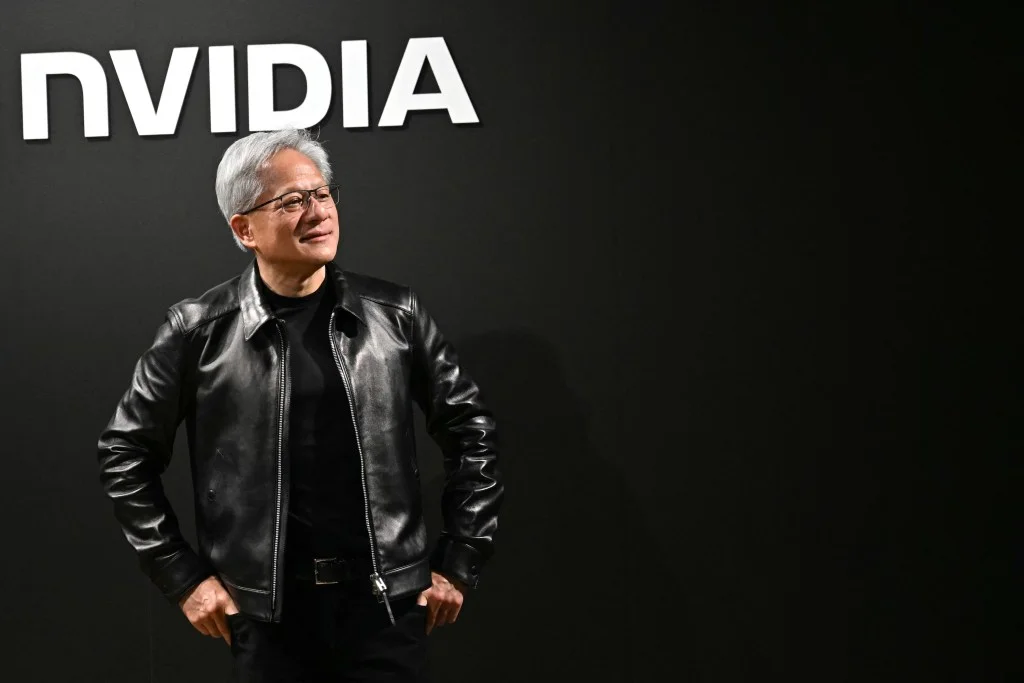
Nvidia CEO Jensen Huang has long been recognized for his distinctive black leather jacket, a staple of his wardrobe for over two decades. A recent auction via Sotheby’s showcased one of his celebrated jackets, which achieved a striking final bid of $960,000, significantly outpacing its presale estimate of $40,000 to $60,000. It's a striking reminder of how branding can elevate even a piece of clothing into a cultural artifact.
The Iconic Jacket
Huang's affinity for the jacket, designed by luxury menswear brand Tom Ford, has made it an essential part of his persona. Described by The New York Times as a "uniform" reflecting his role in the technology industry, the jacket has been photographed on him during major product announcements and developer conferences. This is more significant than it looks — the jacket's presence during pivotal moments for Nvidia symbolizes more than just personal style; it represents Huang's leadership and vision in a rapidly changing tech environment. In fact, it was photomatched to his appearance at the Hon Hai Tech Day in Taipei on October 18, 2023. This emphasizes how intertwined his identity is with Nvidia's image, framing him as a central figure in the AI revolution.
Huang's choice of attire speaks volumes. Black leather is often associated with power and authority, traits that Huang embodies as he leads Nvidia to the forefront of artificial intelligence. In a world where tech leaders often opt for casual wear, his jacket sets a tone that transcends the typical CEO look. This isn't just attire; it's a statement, a shield he wears among colleagues and competitors alike, both reinforcing and redefining the narrative of power in Silicon Valley.
In a nod to the significance of the jacket, Sotheby’s not only marketed it as clothing but as a "uniform" representing a visionary in the AI revolution. Auctioneer’s sales commentary emphasized that this piece has come to symbolize a commitment to innovation and exploration in technology. The jacket's high profile was further illustrated through its authentication by James Spence Authentication, which confirmed Huang's signature on the item. Authentication is essential in such high-stakes auctions, ensuring buyers know they're acquiring more than mere fabric but a piece of tech history.
Proceeds Supporting the Edge Institute
The proceeds from the sale are designated for the Edge Institute, a nonprofit dedicated to forging interdisciplinary collaboration among tech enthusiasts, researchers, and creatives in temporary, innovative communities. Founded in 2018, the Edge Institute's mission aligns with Huang's interests in fostering new ideas and technology development, as evidenced by the institute's focus on grants, fellowships, and residency programs for aspiring innovators. If you're working in this space, the institute’s focus on collaboration suggests it could become a fertile ground for tech breakthroughs in the coming years.
Such fundraising efforts tap into a broader trend in the tech domain, where founders and experts engage in living and collaboration sessions on innovative concepts. This rising enthusiasm isn’t just limited to auction items. One prominent event, Edge Esmeralda, attracted over 1,300 participants last year, illustrating the growing interest in immersive experiences centered around technological exploration. That said, the success of these initiatives often hinges on individuals like Huang, whose financial backing can catalyze widespread engagement.
Philanthropy Beyond Auctions
Notably, Huang's decision to auction the jacket marks a departure from his typical philanthropic approach, which has predominantly involved significant direct donations to educational institutions. In 2022, he and his wife, Lori, donated $50 million to Oregon State University to establish a research complex. Their contributions have also reached other educational institutions such as Stanford and the California College of the Arts. This new method of fundraising reflects a shift, perhaps even a trend, in how tech leaders view their roles in supporting innovation. Instead of writing checks for new buildings, Huang is now creating market-driven ways to fund creativity.
Cultural and Financial Significance
This auction not only underscores the cultural weight carried by Huang's jacket but also reflects an expanding marketplace for notable fashion items connected to influential figures in technology. The substantial final bid further cements Huang's status as a prominent figure in tech, with his net worth reported by the Bloomberg Billionaires Index at $168 billion, making him the eighth-richest person globally. What this means for you, whether in fashion or technology, is the growing intersection of identity, image, and monetary value. This isn't just about cloth and thread; it's about the power dynamics at play in contemporary society.
A similar Tom Ford-designed jacket is available for about $6,990 on the brand's website, illustrating the stark difference in value generated by Huang's public persona. This gap raises questions about the commodification of personal brands and what they can demand in an auction setting. Here’s the thing: Huang's jacket has become a symbol, pushing boundaries between fashion, technology, and cultural significance. Each bid on that jacket wasn't merely a transaction; it was a statement about the value of innovation, the allure of celebrity, and the role of personal branding in shaping public perception.
Implications and Future Outlook
The auction of Jensen Huang's jacket signals intriguing trends within the tech industry and beyond. As tech leaders grow increasingly aware of their public personas, we could see a rise in similar auctions and fundraising initiatives. Social media savvy executives may harness their brand value to spark philanthropic engagements through unique personal items. The numbers here are underwhelming for traditional charity auctions but show that there’s a fresh, albeit speculative, market for what has previously been set aside as mere memorabilia.
In this age where public perception can dramatically shift a company's fortunes, Huang's approach provides a blueprint for others. By transforming personal symbols into fundraising opportunities, executives can foster not only community engagement but also stimulate a cultural dialogue about the role of innovation in society. Ultimately, this auction doesn’t just represent a financial windfall for a nonprofit; it's a movement that could redefine how we view the intersection of identity, technology, and philanthropy.